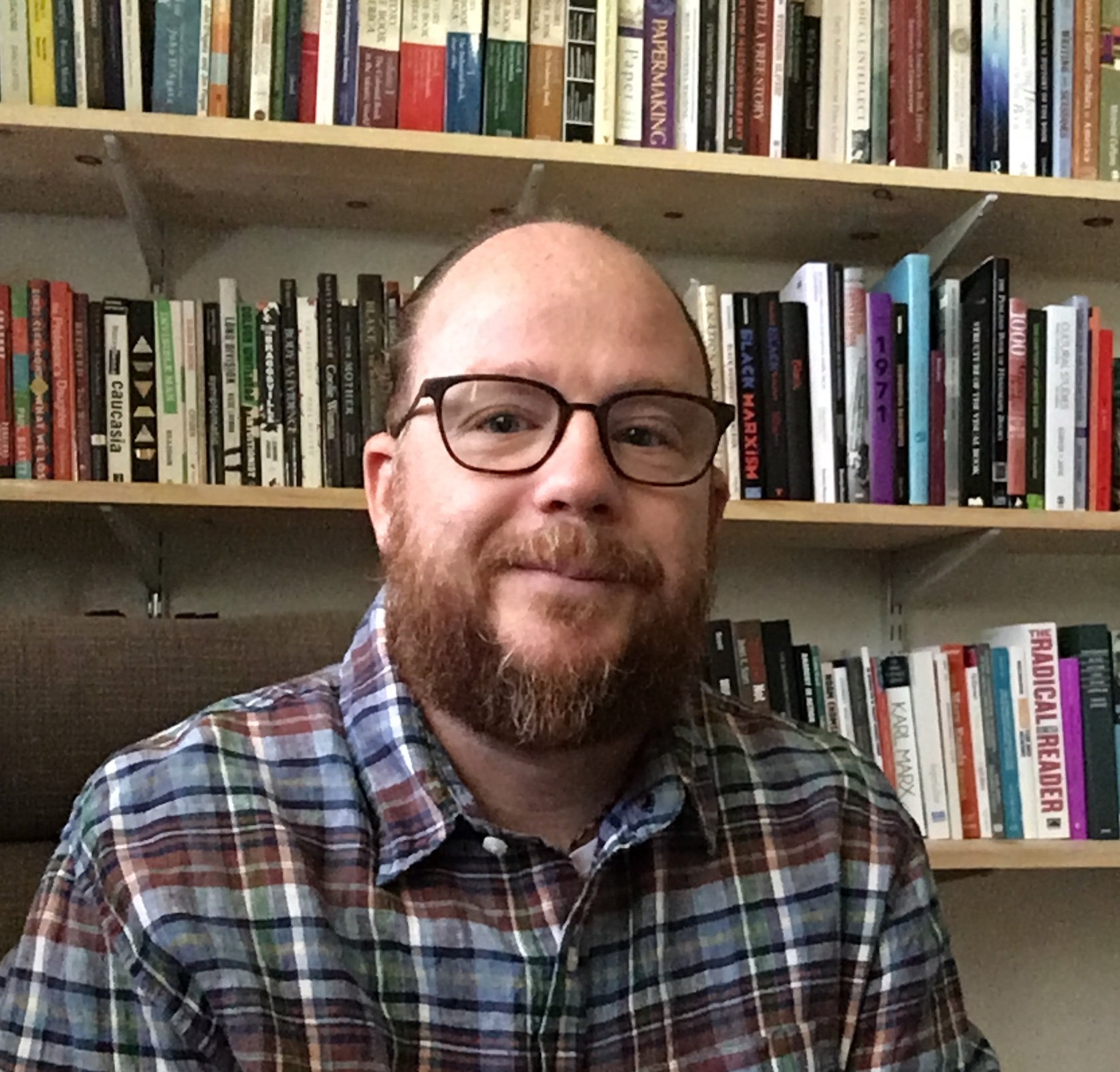
Charlie Gleek
Ph.D. Candidate | Southern Studies | Florida Atlantic University
Kant We Hegel Our Way Out of This? The Problem of People in Postcolonial Studies
Postcolonial theory has a people problem. By this, I do not mean to suggest those who practice, write, or otherwise espouse a postcolonial perspective on cultural affairs are somehow tricky, obtuse, or otherwise problematic to deal with in professional settings. Even if this were the case, the solution to the deficiencies in postcolonial theory most certainly does not lie in the mandatory installation of the Sirius Cybernetics Corporation “Genuine People Personality” (Adams 95) software on every humanities department’s server the world over. Instead, I am unabashedly suggesting that postcolonial theoreticians’ overemphasis on people as the site of analysis lies at the heart of the limitations of the field’s key terms, epistemological boundaries, and approach to understanding phenomena as a whole. Indeed, if postcolonial theory and its related concepts and methods are to have any intellectual purchase, then it is time to abandon its anthropocentric approach to explaining how the world works in favor of perspectives which include non-human entities in colonial processes.
